|
|
욕망 극장, 아홉 시선
나는 내가 원하는 게 어디까지 내 건지 몰라.
난 원래 이기적인 동물이라 내가 원하는 건 다 내 안에서 온 거라 믿고, 또 그리 설치고 다니지만, 가끔 어쩌다가 그게 아닌 거 같은 생각이 들 때가 있어.
옛말에 견물생심見物生心이라 했지. 맞는 말이긴 한데, 물건 물 자를 사람 인 자로 바꿔보면 더 좋지 않을까해. 견인생심見人生心.
그냥 물건이 아니라 누가 그걸 가지고 있냐가 관건이잖아. 그걸 가지면 나도 그 사람처럼 될 거라 상상하잖아. 아니, 난 솔직히 그게 내 거가 아니라 남의 거기 때문에 그걸 원해. 인정.
근데 신기해. 난 원래 이기적인 동물이라 했잖아. 그럼 왜 나의 욕망은 죄다 남에게서 오는 거 같지? 난 끊임없이 남을 모방하거든. 남을 깍아 내리기까지 해. 그럼 내가 올라가게 될 줄 알고. 그래서 난 내가 원하는 게 어디까지 내 건지 모르겠다고 한 거야.
난 남이 나에게 관심을 보여주길 바래. 그것도 그냥 관심이 아니라 아주 좋게 봐주지 않으면 안돼. 칭찬? 그래, 난 칭찬이면 꼼짝 못해. 근데 나에게 아예 관심이 없다면? 그럼 날 볼 수 밖에 없도록 해야지. 다 꼼수가 있어.
아홉 사람이 둘러선 채 서로 바라봐. 그들은 우리에겐 관심이 없어. 아예 등을 돌리고 섰지. 서로에게 집중할 뿐이야. 우린 그들의 어깨너머로 그 안을 들여다볼 수 밖에 없고. 그건 우리 세계 같기도 하고 그렇지 않은 거 같기도 해. 그 중 몇은 서로 닮은 점이 있는 거 같기도 하지만, 또 그렇지 않기도 해.
하나 분명한 건 어떤 서커스같이 코믹하거나 과장된 코스프레, 즉 연극이 벌어지고 있다는 거. 다음은 등장 인물: 강렬한 주홍색 핸드백을 복주머니같이 찬채 거대한 건조무미 덩치로 압도하는 복부인, 초콜릿으로 입가를 범벅으로 만든 인디고 걸, 고양이를 불안하게 안고 고개를 갸우뚱 기울이는 빨간머리 청년, 거침없이 양팔을 휘젓는 나무다리 댄서, 뒤가 뻥 뚤린 키다리 아이언맨과 그의 가슴에 지긋이 기대 선 납작 여인, 불가능해 보이는 각도로 우람한 팔뚝을 선보이는 파란머리 디자이너, 축 처진 어깨가 노출시킨 아름다운 검은 등의 소유자, 그리고 마지막으로 이 연극의 앵커, 우람한 허벅지와 뺏고 싶을 정도로 탐스러운 신발을 자랑하는 슬픈 곡예사 삐에로.
난 이들이 부러워 미쳐.
홍진휘
2019년 7월
WDH
A Theater of Desire, Nine Ways of Getting Noticed
I got a confession to make. I no longer know who's speaking when I say this is what I want.
I was born a selfish animal to begin with, so I always took it for granted that whenever I wanted something it came from me. I'm not so sure now.
There's an old saying that says, "You see a thing, you find a desire you never had." This is good, I mean it's close to what I'm trying to say.
But it's not just a thing when you think about it. What's missing here is the person, I mean, who has that thing. I want that thing because I want to look like him. I'll go further. I want it because it's not mine. I admit it.
This beats me. I told you I'm a selfish animal. But how come all my desires seem to come from other people? There's no end to my copying other people. Envious, I even try to bring them down, thinking that'll make me go up. This is bad, I know. But I'm saying this just to tell you once more that I no longer know who's speaking when I say such-and-such is what I want.
I want people to notice me. Not just notice me, but like me, praise me. Yeah, I'm a sucker when it comes to praise. So I gotta look good. I can't tell you how much time I spend worrying about it. Not interested in me? No problem. There are ways I can make them pay attention. Just watch.
Nine figures form a circle looking at each other. They're not interested in us actually. They turn their backs against us. Their focus is on their own kind, and we can only look in from the outside. Their society may look like ours. Or it may not. Among themselves, some may share some similarity. Or they may not.
What's unmissable is some sort of play-acting going on, comic and exaggerated like in a circus. Or in a costume play. Here's a list of characters: a Gangnam real estate speculator wearing a garish orange purse on her enormous pale-white person, an indigo girl whose mouth is smeared in milk chocolate, a red-haired man whose head tilts sideways while holding a cat perilously, a dynamically arms flapping dancer with wooden legs, a larger-than-life iron man whose back is empty but on whom a delicate-looking lady rests, a blue-haired designer who sports her monumental arms at an impossible angle, a melancholic black figure whose sloping shiny back exposes an achingly beautiful back, and last but not least, the master of ceremony of this whole play, the proud possessor of watermelon thighs and irresistible jumbo shoes, our sad clown Pierrot.
I'm burning in envy.
Hong Jinwhi
July 2019
WDH
인형의 삶
우린 인형의 삶을 잃어버렸습니다.
우리의 삶에서 그를 잃어버렸단 얘기가 아니라
그가 어떻게 사는지 모르게 됐다는 겁니다.
인형의 삶은 우리의 삶이 아닙니다.
그는 우리를 위해 존재하지 않습니다.
이게 시작입니다.
인형의 가장 큰 슬픔은 우리의 이미지로 태어났단 사실입니다.
우린 그 이유만으로
인형에게 자유를 주지 않습니다.
그래서 우리는 인형에게 영혼이 없다고 말합니다.
있다면 우리의 영혼을 부여받은 그릇일 뿐
그에게 독자적 영혼을 허용하지 않습니다.
우린 그렇게 나약합니다.
늙고 병든 우리의 몸이 이 짧고 미미한 생을 거두는 순간
우리의 영혼도 꺼진다는 걸 너무 잘 알기 때문인가요.
우린 너무 오랫동안 그의 삶을 부인해왔습니다.
자, 더 늦기 전에 인형을 보내줍시다.
그 삶의 모습은 정작 다양하고 풍요롭습니다.
먼저, 인형은 장난감이 아닙니다.
우리와 달리 그는 권력투쟁과 전혀 관계가 없습니다.
당신이 원하는 대로 놀아 줄 대상은 다른 곳에서 찾아보십시오.
인형이 귀엽습니까.
그 몸은 우리 어른 몸을 축소시킨 것도, 성장하고 있는 아기 몸을 정지시킨 것도 아닙니다.
그 귀여움의 정체는 시간 밖에 있습니다.
인형은 침묵입니다.
우린 말하는 데 너무 익숙해 있습니다. 그리고 남이 나를 침묵으로 대할 때 너무 잘 다칩니다.인형은 성대가 없습니다. 따라서 우린 그의 메시지를 듣지 않고 있습니다.
인형은 무관심입니다.
인형이 나를 위해 눈물을 흘리는 걸 보았다고요.
거기서 위로를 받는 당신은 아직 그의 삶을 모릅니다.
마지막으로, 인형의 생존권은 우리의 그것과 다르지 않습니다.
우리가 이 행성에 살아야 하는 이유는
인형보다 더 우월하지도 더 열등하지도 않습니다.
우린 인형의 삶을 잃어버렸습니다.
이제 우리가 다시 인형을 대한다는 건 새로운 현실을 만드는 겁니다.
그가 어떻게 살고 있는지 귀 기울여봅니다.
홍진휘
The Doll's Way of Life
We've lost the doll's way of life.
I don't mean the doll is missing from our way of life.
I mean we no longer know how it lives.
The doll's way of life is not our way of life.
It doesn't exist for our own sake.
This is the beginning.
The sorrow of the doll's life is that it was created after our image.
For that reason alone,
we deny it the freedom it deserves.
So we tell ourselves that the doll has no soul.
If any, it must only be our own soul peering through the otherwise empty vehicle.
We can't afford to acknowledge a soul of its own.
We are that weak.
Is it because we know too well that our own soul is snuffed out
when our old, sick body finally gives up this short, brutish existence called life?
For way too long we've denied the doll the life it deserves.
Come, let us set it free before it's too late.
You'll be amazed at how little-minded we've really been.
First of all, the doll is not a toy.
Unlike us, it has nothing to do with power struggle.
You'd better look elsewhere if you want something to get high off of your ego with.
Isn't the doll adorable?
That body is neither a miniature version of a grown-up nor a frozen-up state of a growing baby.
The secret of that adorableness lies outside time.
The doll is all about silence.
We're so used to speaking we take verbal reply for granted.
But the doll has no vocal chords. We're not listening to its message.
The doll is indifferent.
You say you've seen it shed tears for you?
You who find consolation from that have yet to discover the doll's true life.
Last but not least, the doll's right to live is no different from what we say about ours.
We're neither superior not inferior to the doll
in our respective raison d'être here on earth.
We've long lost the doll's way of life.
Meeting the doll again now, we're given a second chance to make a difference.
Let us all listen and see how it lives.
Hong Jinwhi
할머니환타지아
1943년 가을, 곧 세상을 떠날 엄마와 7살짜리 아들이 문 하나를 두고 만나지 못하고 있다. 어린 아들은 엄마가 잘못되어 가고 있다는 불안감에 안절부절 못하고 마당을 빙빙 돌고 있다. 소년은 엄마를 보고 싶지만 집안 어른들이 보지 못하게 해서 방에 들어가지 못한다. 방 안에서는 마지막으로 아들의 이름을 부르는 엄마의 목소리가 들린다. 29살의 나이에 어린 아들을 두고 생을 마감해야하는 여인, 이 여인이 나의 할머니다.
나의 할머니는 과거를 회상하는 아버지의 입을 통해 현재의 나와 함께 있다. 할머니를 만나본 적은 없지만 할머니가 쓰시던 유리찬장을 보며 20대의 할머니와 만난다. 유리찬장을 채웠을 물건들을 상상해 본다. 할머니의 욕망을 품어주던 유리찬장 속으로, 나는 문을 열고 들어간다.
아버지는 평생 어머니를 그리워하고 힘든 일이 있을 때면 사진 속 어머니에게 말을 걸곤 하셨는데 그 모습이 7살 소년이다. 아버지에게 어머니는 멈춰진 시간이다.
얼굴이 없거나, 팔다리가 없거나 뭔가 빠진, 그러나 그것으로 충분한 몸이 있다. 어릴 때 헤어진 부모자식이지만 서로의 상상 속에서 이어가는 인연이 있다. 불충분한 상황을 누가 함부로 불행하다고 단정 지을 수 있을 것인가.
70년을 기다려 온 인형이 있다. 70년 후에도 여전히 인형으로 남아있을. 시간이 없는 공간에서 온 인형은 절대 늙지 않는다. 항상 같은 얼굴 표정으로, 보는 사람을 자신과 동일시한다. 인형은 변하지 않는 몸속으로, 시간이 정지된 세계로, 다른 사연을 가진 모든 사람들을 초대한다.
29세의 할머니와 46세의 손녀가 만났다.
민지희
Grandma Fantasia
Fall, 1943. A dying woman and her 7-year-old boy were being kept apart by a door. The boy knew something was wrong about his mother and wanted to see her badly, but they stopped him. He could hear her calling out his name from the other side of the door. He went out into the front yard and started running round it--again and again. The woman who was leaving behind this little boy for good was 29 years old, and she was my grandma.
I never met her, but she is with me thanks to what my father told me. There is also in my possession her dark-painted cupboard with glass doors. I meet her through this marvelously pregnant object. Which inspires me to imagine how she must have filled it and what it must have meant for her. It is a space of desire. And I open the glass doors to jump in.
All his life whenever my father missed her and when things got tough, he would talk to her in the old photo. As a 7-year-old boy, however. Time stopped for him. Fall, 1943. Not only for him, but also for his mother, who has never grown older.
Certain bodies, though incomplete or severed, may be sufficient in themselves. Torn relations between parents and children at an early age may likewise be sustained through the powers of imagination on both parties. Who among us would dare to call it tragic only because things appear incomplete to our eyes.
Imagine a doll that has been waiting for 70 years. This doll will still be the same after 70 years. It has come from a space without time, where things never age. Always with the same face it identifies itself with the viewer. To this world of changeless bodies, of frozen time, our doll invites all those willing to share a story of their own.
The 46-year-old granddaughter meets her 29-year-old grandma.
Gihi Min
DONKEY a short story
Grandma was a donkey. They said admiringly. For she worked so hard and was obedient and loyal. So they said. Grandma was a donkey. They said angrily. For she was stubborn and wouldn’t listen. So they said.
They had arranged grandma to marry a boy two years her junior. She was fourteen. Upon seeing her sturdy thighs her mother-in-law shrieked with joy. From that moment her endless physical labor began, which included not only household chores but tilling the back-breaking rice paddies. Grandma became one awesome body. The amount of work that body produced was simply staggering. But this still doesn’t really go beyond what they had to say about her.
Grandma was a dreamer. This they didn’t know. In fact she lived most of her life in her dreams. Even if they found out about this appalling fact they wouldn’t have liked to admit it because they themselves mattered very little in her dreams.
Instead, her dream world was filled with those which could not speak. To them she gave herself freely, gladly. She would ask: “Shall we get close, you and me?” To which they would reply: “But of course!”
Grandma wailed for days on end when these companions died or ceased to exist. But after a while they, nearly all of them, somehow manage to return to her world. Once so loved by grandma they never want to leave her side for good.
Granddaughter used to hear you look just like your grandma. She too was a dreamer, living most of her life in her dreams, but this obviously was not what they meant.
Last night she saw grandma in her dream. The monumental body was scarred all over. Grandma was gazing down at newly-born granddaughter, and off her sloping shoulders came down a sea of melancholy.
Today granddaughter is dreaming again. Her world too is filled with those which cannot speak. To them she is giving herself completely, lovingly--knowing very well the dangers involved. “Shall we get close, you and me?” “Yes, yes.”
Had grandma ever met granddaughter they would’ve recognized each other.
Grandma died when granddaughter’s dad was nine.
Dreaming she goes on
Hong jinwhi
Cutout
One day, I felt uncomfortable about the sense of volume in my previous work. It put me in mind of an overinflated balloon. I asked myself, What if I get rid of all that empty space inside? So I started making clay tablets and drew life-size human figures on them, which I then cut out using the knife. This process took me back to the paper dolls I used to play with when I was a little girl. I was obsessed about those dolls and lovingly made everything for them--beds, pillows, furniture, not to mention a house. How I fussed over them. I would cut the doll and her clothes out of the cardboard. But instead of throwing away the remainder I held it against my multi-colored bedcovers and imagined that my doll was now wearing a new set of clothes. I’m still fascinated to remember that moment.
My childhood memories have a tremendous influence on the way I work. Memory however can change or disappear altogether, subject to our individual will and nature (or unconsciously for that matter). We see how people remember the same event differently. I wonder if memory is something we create. A perfect, immutable memory is an oxymoron. My body may be here in the present, but I watch myself flying back and forth between the past and the future in search of the fantastical.
Working on this two-dimensional work, I was a bit apprehensive. I think it was because for many years I had been dominated by the high ideal of volume and the insistence of non-straight line. At the same time, I felt a sense of liberation. I am presently alternating between ceramic and metal work. You put a fat chunk of metal through the press, and out comes something unreservedly flat. I find this both sad and funny. With clay, on the other hand, as I was creating my deflated and equally flat, figures, I felt a rush of genuine, unexpected, pleasure. It was as if something unnecessary had just been taken away from me: a distillation, a pleasure of lightening the load for my journey.
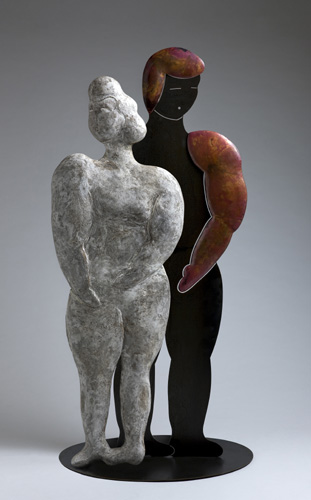
 In Foul Sin For Mirth In Foul Sin For Mirth
What goes on between woman and man is ultimately mysterious. Just when we think we have it under control, it escapes us. It is small comfort for those who try to institutionalize such relations and settle for stability only to dine with their spouse in silence everyday. I have worked on this piece in honor of that which animates man and woman beyond conventional morality.
I used two different materials, ceramic and metal, on one hand and two different forms, surface and volume, on the other. By doing so, I wanted to suggest the idea of unconventional coupling to the viewers and ask them how they would deal with such a possibility.
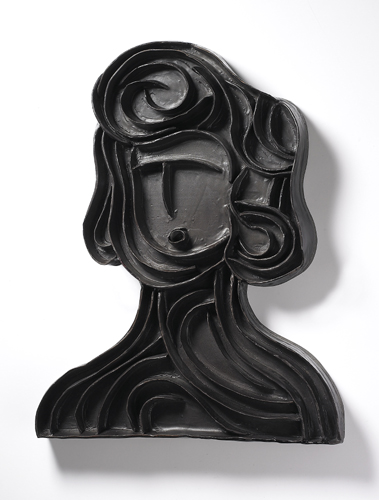
Dorothy
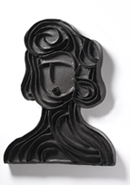 Face may be the most important part of our body (just think how much attention we give it). We figure each other out just by looking at the face. It is the tableau where our personal identity is stored. However, the face you see in the mirror and the face they see in you may not be the same. Even they amongst themselves are divided when it comes to looking at your face, though they do not mistake you for someone else. My piece is about acknowledging such different points of views on our otherwise unique personal identity. Face may be the most important part of our body (just think how much attention we give it). We figure each other out just by looking at the face. It is the tableau where our personal identity is stored. However, the face you see in the mirror and the face they see in you may not be the same. Even they amongst themselves are divided when it comes to looking at your face, though they do not mistake you for someone else. My piece is about acknowledging such different points of views on our otherwise unique personal identity.
I pressed clay to make a tableau and placed thin strips of clay on it. I then took it apart and as I reassembled it I followed the muscle lines of my model's face. I adjusted the angles of each strip so the face would look different depending on each direction of light.
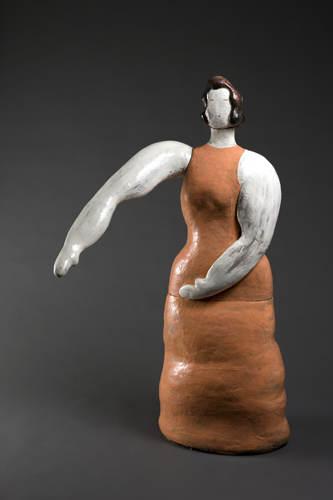
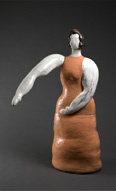 Soprano Soprano
I went to one soprano's recital last year, without any high expectations. As I listened to her strong voice, however, I felt as if I had been whipped into a hurricane. I was humbled by that which I had not anticipated, and I appreciated how this experience made me see things differently.
I focused on her arm to make it sing.
|
|
| |
 |
|

 Home >